Medical & Clinical Analyzers
In medical analyzers, photo interrupters are used to monitor mechanisms by detecting a rotor’s home position or confirming cuvette transport. This article outlines where they are used, suitable sensor types, and the specifications to check when selecting one.
Where Photo Interrupters
Are Used in Medical
& Clinical Analyzers
| Location / mechanism in the device | Detection purpose | Detection target | Key design considerations |
|---|---|---|---|
| Rotor / turntable | Home position detection / rotational position synchronization | Light-shielding plate / slotted disk | Fast response / ambient light countermeasures |
| Cuvette / sample container transport path | Container presence detection | Cuvette / sample cup | Transparent-object detection / contamination precautions |
| Sample / reagent probe | Vertical travel end-point detection | Probe body / arm | A simple configuration is sufficient |
| Door / cover | Open/closed state detection | Door body / lock mechanism | A simple configuration is sufficient |
| Transport mechanism | Sample rack passage detection | Rack / carrier | Gap width selection based on container shape |
What Photo Interrupters Can and Cannot Detect
What They Can Detect
- Presence or absence of containers and parts
- Home and end positions of mechanisms
- Open/closed states of doors and covers
What They Cannot Detect / Conditional Cases
- Measurement of sample color, turbidity, or absorbance
- Liquid level detection (under certain conditions)
To measure sample color, turbidity, or absorbance, photodetectors designed for spectrophotometers or photometers are generally used. Capacitive or ultrasonic sensors may be used to detect liquid level.
Types of
Photo Interrupters Used
in Medical Analyzers
Transmissive Photo Interrupters
When there is space for components on both sides of the target, a transmissive type is the first choice. Because the target directly interrupts the light path, the signal changes significantly between light-blocked and unblocked states, supporting stable detection.
Other Optical
Sensor Configurations
If the sensor can only be mounted on one side, a reflective type is an option. For transparent targets, also consider an actuator type that uses a moving lever to interrupt the light beam. If the detection points are far apart, a separate type that allows the emitter and detector to be installed independently is suitable.
Key Specifications
to Check
Once you have narrowed down your sensor candidates, check the following specifications in their datasheets. This section outlines the key items to check when selecting sensors for medical devices.
Slot Width and Gap Width
Gap width determines whether the target can pass through the sensor slot. Because targets are small and mechanisms are precise in analytical instruments, choosing a manufacturer that offers a wide range of gap widths makes it easier to find a product suited to the mechanism.
Slit Width
Slit width affects detection resolution. A narrower slit limits the detection area, allowing the moment a target passes to be detected more precisely. For precision applications such as rotor home position detection, a product with a narrow slit is effective.
Output Type
A phototransistor output provides an analog signal, with the threshold set by the external circuit. A photo IC output has a built-in processing circuit and delivers a digital signal. Medical devices have strict noise-control requirements, so check compatibility with the circuit the sensor will be connected to.
Ambient Light Resistance
In medical devices, factors such as internal light sources, external light entering through windows, and room lighting can affect sensor detection. To reduce such interference, consider a product with a visible-light-blocking filter or one that uses modulated light.
Mounting Method
Because medical devices have sterilization and cleaning requirements, the selection of connectors and mounting methods becomes important. Consider ease of part replacement and cleaning, and check whether the mounting method suits the equipment’s maintenance and cleaning conditions.
Detecting Transparent Objects
With a standard transmissive photo interrupter, light can pass through transparent cuvettes or films, making them difficult to detect. In addition to actuator types, some products use manufacturer-specific wavelength selection or optical designs to detect transparent objects.
If you are looking for photo interrupter manufacturers offering transparent-object detection, see the following article.
Design and Reliability Considerations
Even when the specifications match, detection can become unstable due to mounting tolerances, vibration, contamination, or ambient light. Therefore, it is important to verify operation under actual mounting conditions and in the intended operating environment during prototyping.
Because medical devices often remain in production and service for many years, checking a sensor’s continued availability and lifecycle during selection can reduce the risk of future component changes.
Why Replacing
a Sensor Isn’t Just
a Technical Decision
Design Change Management Under ISO 13485
Finding a candidate replacement does not necessarily mean it can be used as a substitute right away. ISO 13485 requires documented procedures for evaluating and approving component changes.
Compliance Requirements in India
In India, post-approval changes are classified as major or minor under the Sixth Schedule of the Medical Devices Rules, 2017, which are administered by the Central Drugs Standard Control Organization (CDSCO). Changes to materials of construction or design changes affecting performance or stability are classified as major changes and require prior approval from CDSCO before implementation. Changes that do not affect performance or stability are classified as minor changes and require notification only.
Because the results of installing and testing samples can help assess whether a change is major or minor, it is important to start consulting the quality assurance and regulatory affairs departments while testing is underway.
NEXT STEPFind a
Photo Interrupter Manufacturer
That Fits Your Design
When selecting a photo interrupter, you may encounter requirements that standard products cannot meet. This site carefully selects manufacturers with proven experience in meeting specialized sensing and procurement requirements and compares their product lineups, key specifications, and availability in India. Use this information to help choose a manufacturer.
for 3 Specific
Design Challenges
This section looks at three design challenges that standard parts often struggle to address and introduces one manufacturer suited to each. All three are manufacturers whose products are confirmed to be carried by distributors or sales agents in India.
Advertiser Disclosure: We receive compensation from some of the companies listed below. This compensation may affect which companies are included and the order in which they appear.
ELECTRONICS
from Other Manufacturers
Can Be Recreated
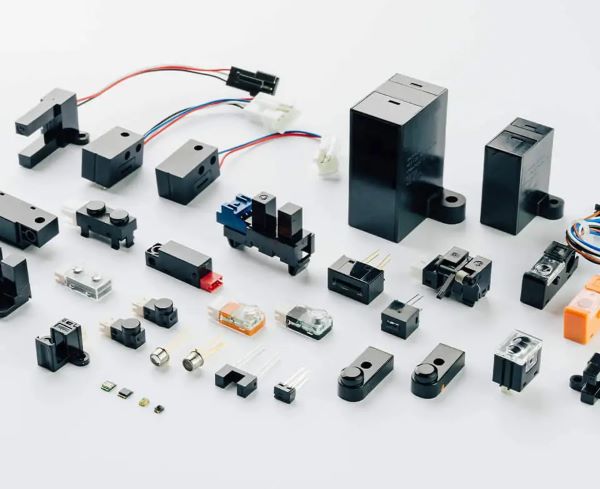
Because SHINKOH ELECTRONICS designs both the emitter and detector in-house, it can reproduce parts with dimensions and characteristics close to the original, helping avoid PCB redesign and recertification.
to Keep Costs Down
As a specialist optical sensor manufacturer, SHINKOH ELECTRONICS maintains designs spanning 50 years of products.* Its broad current and legacy product range makes it possible to find a near-custom fit without developing a fully custom part, which can help keep costs down.
Sourcing
| Where to buy in India | Local distributor (Toshniwal Sensors) |
|---|---|
| Samples | Available |
or Air Bubbles in Tubing
Electronics
Hold the Tubing Securely
to Keep the
Sensing Position Stable
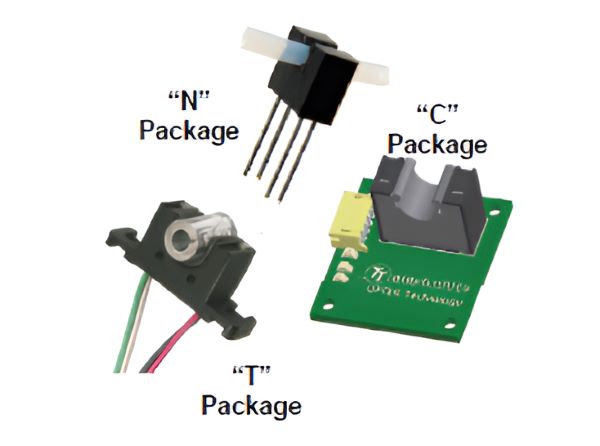
Models are available for tube outer diameters of 1.6, 3.2, 4.8, and 6.3 mm, with arc-shaped slots sized to match each diameter, helping keep the sensing position stable.
and Tube Detachment
with a Single Sensor
TT Electronics’ fluid sensors have been used in hemodialysis machines and infusion pumps. With an additional decision circuit, the sensor can distinguish liquid presence or absence, passing air bubbles, and the absence of a tube, and can also detect tube detachment.
Sourcing
| Where to buy in India | element14 / RS / Mouser / DigiKey |
|---|---|
| Samples | Available |
in a Tight Enclosure
Semiconductor Innovation
Fits in the Space Between
the PCB and Mechanism
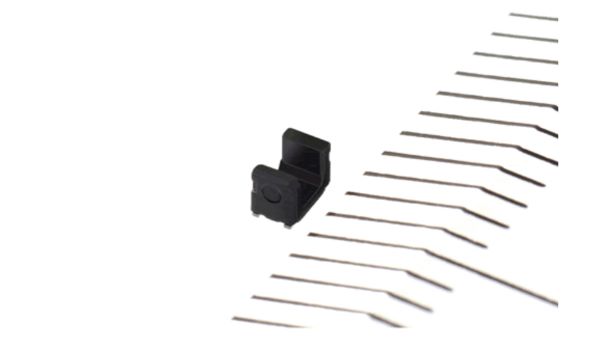
At just 2.26 × 1.4 × 1.6 mm, its surface-mount design means no leads protrude from the back of the PCB. It fits entirely in the space between the PCB and mechanism, allowing a sensor to be added without changing the enclosure thickness.
a Narrow Sensing Area
to Detect
Small Objects
and Fine Features
With its 0.12 mm slit width and small sensing area, it can detect the position of small moving parts such as a lens, allowing the flag on the mechanism to be made smaller.
Sourcing
| Where to buy in India | element14 / RS / Mouser / DigiKey |
|---|---|
| Samples | Contact for availability |
*Source: SHINKOH ELECTRONICS official website, as of September 2026
(https://www.landingpage-synergy.com/p464xnO9/)
Across the 3 Manufacturers
| SHINKOH ELECTRONICS | TT Electronics | SHARP Semiconductor Innovation | |
|---|---|---|---|
| Gap width range | 2–15 mm | 2.03–32.0 mm | 1.0–10.0 mm |
| Slit width range | 0.2–2 mm | 0.076–1.52 mm | 0.12–1.8 mm |
| Mounting method | Direct PCB mount / surface mount (reflow) / snap-in connector / screw-mount connector / screw-mount harness | PCB mount / panel mount / screw mount / wire leads (24", 26 AWG) / free-hanging | PWB through-hole / surface mount (reflow) / snap-in connector / case type with screw holes |
| Environmental options | Dust resistance / drip resistance / visible-light blocking | Dust resistance / ambient-light protection | Not specified on the official website |
| Example applications | ATMs, analytical instruments, inspection equipment | Portable hemodialysis machines, infusion pumps | Digital cameras, Blu-ray recorders |
| Customization | Available | Available | Contact for availability |