How to Select a Photo Interrupter
When selecting a photo interrupter, it is important to check the detection method, external dimensions, output type, mounting method, operating conditions, and other factors relevant to your application. This article explains how to identify your requirements and efficiently narrow down your options.
Photo Interrupter Selection at a Glance
- Define the detection goal
- Choose the detection method (e.g., transmissive or reflective)
- Check the gap width (slot width), sensing distance, and the target’s shape and size
- Choose the output type (phototransistor output or photo IC / logic output)
- Check the mounting and connection methods (SMD, through-hole mounting, connectors, and pre-wired options)
- Check the operating conditions and detection reliability (environmental factors such as temperature, ambient light, and dust)
Key Specifications
to Compare
When narrowing down candidate products, check the following specifications and select the product that best suits your application.
| Detection method | Transmissive / reflective configuration |
|---|---|
| Mechanical compatibility | Slot width, sensing distance, aperture/slit, external dimensions |
| Output | Phototransistor output, Photo IC (logic) output |
| Mounting and connection | SMD, through-hole mounting, connector connections, and pre-wired configurations |
| Detection performance | Response characteristics and required position detection accuracy |
| Operating environment | Environmental conditions such as temperature, ambient light, and dust |
Design & Detection Reliability Considerations
Even if the external dimensions and output type meet your requirements, detection may not be stable in the actual equipment. The following factors can lead to false detection or detection failure, so check them in advance.
- The position of the detection target and the mechanical tolerances of the mounting area
- Ambient light, contamination, and changes in optical conditions
- Response characteristics for moving or high-speed targets
- The decision threshold and output behavior in the actual circuit
Explore Photo Interrupter Selection & Design Guides
For photo interrupters, suitable sensor arrangements and target types vary by detection method. Start with the detection method most relevant to your application, then review its structure and key selection considerations.
Transmissive Photo Interrupters
This detection method is used when the emitter and detector can be placed on opposite sides of the target object. The following article explains the structure, features, and specifications to check in detail.
Reflective Photo Interrupters
This detection method is used when it is difficult to position the emitter and detector on opposite sides of the target object. The following article provides detailed guidance on suitable configurations and selection considerations when it is difficult to place the emitter and detector opposite each other.
NEXT STEPFind a
Photo Interrupter Manufacturer
That Fits Your Design
When selecting a photo interrupter, you may encounter requirements that standard products cannot meet. This site carefully selects manufacturers with proven experience in meeting specialized sensing and procurement requirements and compares their product lineups, key specifications, and availability in India. Use this information to help choose a manufacturer.
for 3 Specific
Design Challenges
This section looks at three design challenges that standard parts often struggle to address and introduces one manufacturer suited to each. All three are manufacturers whose products are confirmed to be carried by distributors or sales agents in India.
Advertiser Disclosure: We receive compensation from some of the companies listed below. This compensation may affect which companies are included and the order in which they appear.
ELECTRONICS
from Other Manufacturers
Can Be Recreated
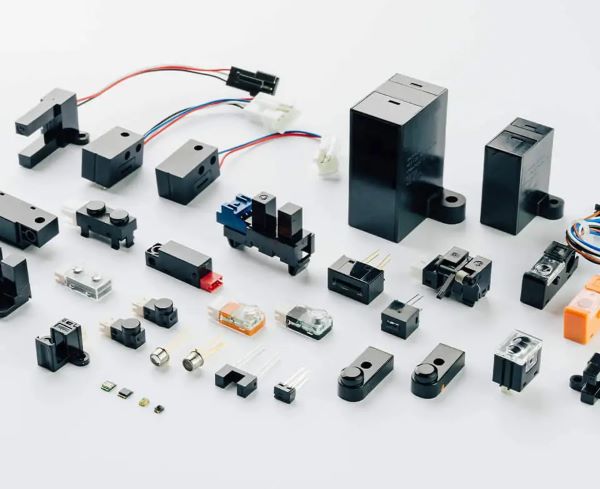
Because SHINKOH ELECTRONICS designs both the emitter and detector in-house, it can reproduce parts with dimensions and characteristics close to the original, helping avoid PCB redesign and recertification.
to Keep Costs Down
As a specialist optical sensor manufacturer, SHINKOH ELECTRONICS maintains designs spanning 50 years of products.* Its broad current and legacy product range makes it possible to find a near-custom fit without developing a fully custom part, which can help keep costs down.
Sourcing
| Where to buy in India | Local distributor (Toshniwal Sensors) |
|---|---|
| Samples | Available |
or Air Bubbles in Tubing
Electronics
Hold the Tubing Securely
to Keep the
Sensing Position Stable
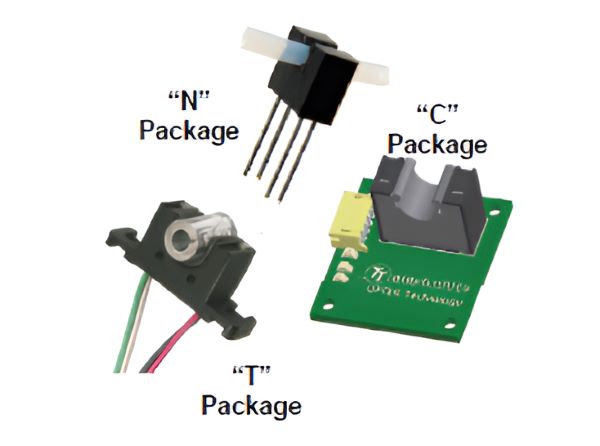
Models are available for tube outer diameters of 1.6, 3.2, 4.8, and 6.3 mm, with arc-shaped slots sized to match each diameter, helping keep the sensing position stable.
and Tube Detachment
with a Single Sensor
TT Electronics’ fluid sensors have been used in hemodialysis machines and infusion pumps. With an additional decision circuit, the sensor can distinguish liquid presence or absence, passing air bubbles, and the absence of a tube, and can also detect tube detachment.
Sourcing
| Where to buy in India | element14 / RS / Mouser / DigiKey |
|---|---|
| Samples | Available |
in a Tight Enclosure
Semiconductor Innovation
Fits in the Space Between
the PCB and Mechanism
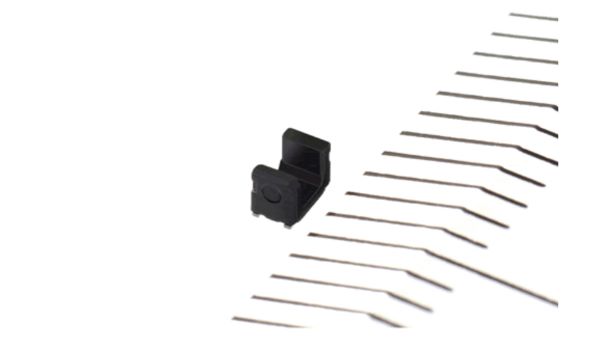
At just 2.26 × 1.4 × 1.6 mm, its surface-mount design means no leads protrude from the back of the PCB. It fits entirely in the space between the PCB and mechanism, allowing a sensor to be added without changing the enclosure thickness.
a Narrow Sensing Area
to Detect
Small Objects
and Fine Features
With its 0.12 mm slit width and small sensing area, it can detect the position of small moving parts such as a lens, allowing the flag on the mechanism to be made smaller.
Sourcing
| Where to buy in India | element14 / RS / Mouser / DigiKey |
|---|---|
| Samples | Contact for availability |
*Source: SHINKOH ELECTRONICS official website, as of September 2026
(https://www.landingpage-synergy.com/p464xnO9/)
Across the 3 Manufacturers
| SHINKOH ELECTRONICS | TT Electronics | SHARP Semiconductor Innovation | |
|---|---|---|---|
| Gap width range | 2–15 mm | 2.03–32.0 mm | 1.0–10.0 mm |
| Slit width range | 0.2–2 mm | 0.076–1.52 mm | 0.12–1.8 mm |
| Mounting method | Direct PCB mount / surface mount (reflow) / snap-in connector / screw-mount connector / screw-mount harness | PCB mount / panel mount / screw mount / wire leads (24", 26 AWG) / free-hanging | PWB through-hole / surface mount (reflow) / snap-in connector / case type with screw holes |
| Environmental options | Dust resistance / drip resistance / visible-light blocking | Dust resistance / ambient-light protection | Not specified on the official website |
| Example applications | ATMs, analytical instruments, inspection equipment | Portable hemodialysis machines, infusion pumps | Digital cameras, Blu-ray recorders |
| Customization | Available | Available | Contact for availability |