Reflective Photo Interrupter
A reflective photo interrupter is an option when the target cannot be positioned between the emitter and detector. It can detect a target with the sensor placed on just one side, but its response can vary depending on the target’s color and surface condition. This article explains how reflective photo interrupters work and key considerations for preventing detection failures after mass production begins.
What Is a Reflective
Photo Interrupter?
It is a small, rectangular component with an emitter and a detector positioned side by side and facing the same direction. Unlike a transmissive type, which detects a target positioned in a U-shaped slot, a reflective type shines light on the target from one side to detect it. It is suitable when the target is too large to pass through a slot or when a component cannot be installed on the opposite side.
Different Names Used
by Manufacturers
Naming conventions for the reflective type vary from manufacturer to manufacturer and are not standardized. When searching for components, use “Reflective” as a search term to avoid confusion, as five of the six manufacturers use this term.
| Shinkoh Electronics | Photo Reflector |
|---|---|
| Sharp Corporation | Photo Interrupter (Reflective Type) |
| OMRON (Now Aratas Corporation) | Photo Microsensor (Reflective) |
| TT Electronics (OPTEK) | Reflective Object Sensor |
| KODENSHI | Reflective Type Photointerrupter / Paper Sensor |
| ROHM | Reflective Type Photosensor |
How Does a Reflective Photo Interrupter Work?
Light emitted by the LED reflects off the target, and some of the reflected light reaches the detector. When no target is in front of the sensor, very little light returns, and the output remains in the “no detection” state. As the target approaches, more light is reflected back, and when the received light level exceeds a preset threshold, the output switches to “detection”.
Common Applications
of Reflective
Photo Interrupters
| Paper presence detection | Paper and sheets | Paper presence detection in printers and multifunction devices |
|---|---|---|
| Label and mark reading | Black marks and printed patterns | Reference for alignment and print timing |
| Line following | Lines on floors and conveyor surfaces | Detection of conveyance paths and travel direction |
| Proximity detection | Buttons, levers, and moving parts | Detection of button presses and approaching objects |
For information on how photo interrupters are used in various devices and industries, including printers, ATMs, and medical analyzers, see the articles below.
Key Characteristics
of Reflective
Photo Interrupters
This section summarizes the characteristics of reflective photo interrupters, covering both their advantages and limitations.
Advantages of
Reflective Detection
- It can be installed on just one side of the target, making it suitable for mechanisms without space for opposing sensor placement
- The emitter and detector do not need to be installed separately, making the sensor easy to integrate and helping save space
- It can also be used to detect targets that cannot pass through a slot, such as large objects or wall surfaces
Limitations and
Design Constraints
- The signal change is small, so the difference between “detection” and “no detection” is less distinct than with a transmissive type
- The response varies depending on the color and surface condition of the target object (black objects or glossy metals may appear to produce no response)
- A reflective object in the background may be mistakenly detected as the target object
- Detection is less precise than with a transmissive type, making it unsuitable for precise positioning
Reflective vs.
Transmissive
Photo Interrupters
| Comparison item | Reflective type | Transmissive type |
|---|---|---|
| Detection method | Detects targets based on changes in reflected light | Detects by blocking light |
| Positional relationship between the sensor and the target object | One-sided placement is sufficient | Opposing placement is required |
| Mechanism layout | Space-saving | Space is needed to install both the emitter and detector |
| Influence of the target object’s surface condition | Susceptible | Less susceptible |
| Main applications | Paper presence detection, line following, proximity detection | Paper-feed detection and rotation counting |
The choice depends on two factors: whether the target can be positioned between the emitter and detector and how precisely it must be detected. If the target cannot be positioned between the emitter and detector, or if less precise detection is acceptable, a reflective type is an option.
Key Specifications
to Check for a Reflective
Photo Interrupter
| Sensing distance | Whether the sensing distance matches the distance to the target |
|---|---|
| Detection characteristics | Whether sensitivity can be adjusted, and over what range |
| Output type | Whether the sensor has a phototransistor or photo IC (logic) output and is compatible with the connected circuit |
| Resistance to ambient light | Whether a modulated-light system is used |
The sensing distance stated in a datasheet is typically a value measured under specific conditions, such as using a white reference plate. In practice, the sensing distance varies with the target’s color and surface condition.
Factors That Affect Reflective Detection Performance
A reflective sensor may work correctly during prototyping but produce different detection results if the target or installation conditions change during mass production. Watch out for cases like the following.
| It was calibrated with white paper but does not respond to brown cardboard | Reflectance varies with color, and too little reflected light reaches the detector |
|---|---|
| A white wall 5 cm behind the target is mistakenly detected as an object | Reflective sensors can detect the background as well as the intended target |
| Only 1 out of 10 units has a weak response | Unit-to-unit differences or slight variations in mounting angle can affect the amount of reflected light received |
| Detection is unstable without sensitivity adjustment | Sensitivity must be adjusted based on the target, background, and installation distance, making installation more difficult |
When evaluating the sensor in the actual equipment, check the following items.
- Whether detection works with the target’s actual color, material, and surface condition (do not rely solely on testing with white paper or samples during prototyping)
- Whether there is any highly reflective object behind the target
- Whether unit-to-unit variation stays within the sensitivity adjustment range
- Whether detection can be maintained even if the reflectance changes over time (dirt, fading)
When Should You Choose a Reflective Photo Interrupter?
If the sensor can be installed on only one side of the target, or if installation space needs to be minimized, a reflective type is a strong candidate. On the other hand, detection is more likely to be unstable if the target’s color or material changes frequently, precise positioning is required, or a highly reflective object is located directly behind the target. In such cases, other methods, such as a transmissive type, are more suitable.
Ultimately, it is important to make the decision based on the sensor type, mechanism, circuit, and operating environment.
NEXT STEPFind a
Photo Interrupter Manufacturer
That Fits Your Design
When selecting a photo interrupter, you may encounter requirements that standard products cannot meet. This site carefully selects manufacturers with proven experience in meeting specialized sensing and procurement requirements and compares their product lineups, key specifications, and availability in India. Use this information to help choose a manufacturer.
for 3 Specific
Design Challenges
This section looks at three design challenges that standard parts often struggle to address and introduces one manufacturer suited to each. All three are manufacturers whose products are confirmed to be carried by distributors or sales agents in India.
Advertiser Disclosure: We receive compensation from some of the companies listed below. This compensation may affect which companies are included and the order in which they appear.
ELECTRONICS
from Other Manufacturers
Can Be Recreated
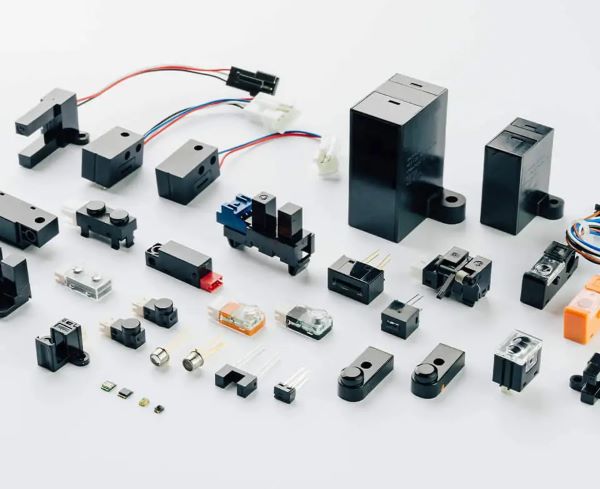
Because SHINKOH ELECTRONICS designs both the emitter and detector in-house, it can reproduce parts with dimensions and characteristics close to the original, helping avoid PCB redesign and recertification.
to Keep Costs Down
As a specialist optical sensor manufacturer, SHINKOH ELECTRONICS maintains designs spanning 50 years of products.* Its broad current and legacy product range makes it possible to find a near-custom fit without developing a fully custom part, which can help keep costs down.
Sourcing
| Where to buy in India | Local distributor (Toshniwal Sensors) |
|---|---|
| Samples | Available |
or Air Bubbles in Tubing
Electronics
Hold the Tubing Securely
to Keep the
Sensing Position Stable
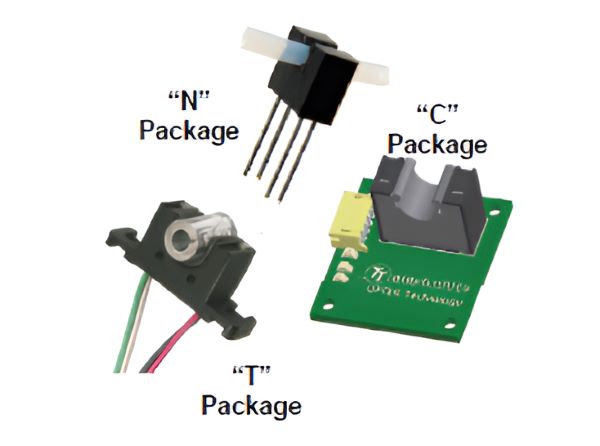
Models are available for tube outer diameters of 1.6, 3.2, 4.8, and 6.3 mm, with arc-shaped slots sized to match each diameter, helping keep the sensing position stable.
and Tube Detachment
with a Single Sensor
TT Electronics’ fluid sensors have been used in hemodialysis machines and infusion pumps. With an additional decision circuit, the sensor can distinguish liquid presence or absence, passing air bubbles, and the absence of a tube, and can also detect tube detachment.
Sourcing
| Where to buy in India | element14 / RS / Mouser / DigiKey |
|---|---|
| Samples | Available |
in a Tight Enclosure
Semiconductor Innovation
Fits in the Space Between
the PCB and Mechanism
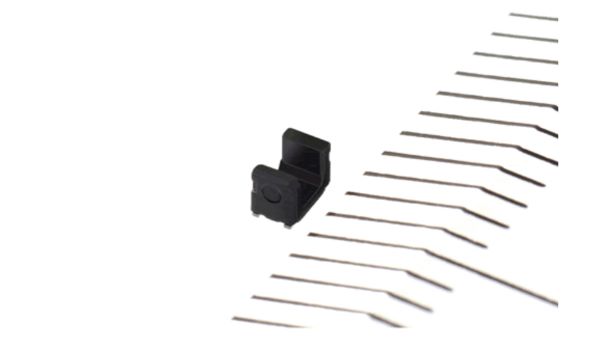
At just 2.26 × 1.4 × 1.6 mm, its surface-mount design means no leads protrude from the back of the PCB. It fits entirely in the space between the PCB and mechanism, allowing a sensor to be added without changing the enclosure thickness.
a Narrow Sensing Area
to Detect
Small Objects
and Fine Features
With its 0.12 mm slit width and small sensing area, it can detect the position of small moving parts such as a lens, allowing the flag on the mechanism to be made smaller.
Sourcing
| Where to buy in India | element14 / RS / Mouser / DigiKey |
|---|---|
| Samples | Contact for availability |
*Source: SHINKOH ELECTRONICS official website, as of September 2026
(https://www.landingpage-synergy.com/p464xnO9/)
Across the 3 Manufacturers
| SHINKOH ELECTRONICS | TT Electronics | SHARP Semiconductor Innovation | |
|---|---|---|---|
| Gap width range | 2–15 mm | 2.03–32.0 mm | 1.0–10.0 mm |
| Slit width range | 0.2–2 mm | 0.076–1.52 mm | 0.12–1.8 mm |
| Mounting method | Direct PCB mount / surface mount (reflow) / snap-in connector / screw-mount connector / screw-mount harness | PCB mount / panel mount / screw mount / wire leads (24", 26 AWG) / free-hanging | PWB through-hole / surface mount (reflow) / snap-in connector / case type with screw holes |
| Environmental options | Dust resistance / drip resistance / visible-light blocking | Dust resistance / ambient-light protection | Not specified on the official website |
| Example applications | ATMs, analytical instruments, inspection equipment | Portable hemodialysis machines, infusion pumps | Digital cameras, Blu-ray recorders |
| Customization | Available | Available | Contact for availability |